Category: Bookkeeping

  • Operating Cycle Learn How to Calculate the Operating Cycle

    what is operating cycle in accounting

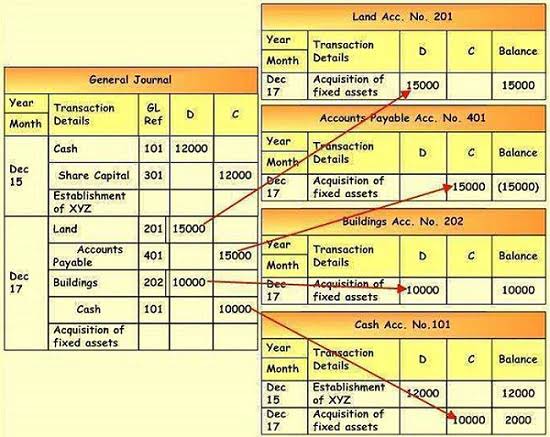
    By implementing these strategies, businesses can effectively manage their operating cycles, improve cash flow management, and achieve greater financial stability and growth. The operating cycle serves as a valuable tool for businesses to assess their financial health, identify operational inefficiencies, and make informed decisions for long-term success. The operating cycle plays a crucial role in analyzing a company’s efficiency and financial performance. The purpose of adjusting entries is to ensure both the balance sheet and the income statement faithfully represent the account balances for the accounting period. There are five Budgeting for Nonprofits types of adjusting entries as shown in Figure 3.5, each of which will be discussed in the following sections.

    what is operating cycle in accounting

    Cash App

    • CCC, or cash conversion cycle, assists finance leaders in managing inventory and cash flow.
    • The information can be used to calculate the operating cycle of the business.
    • A shorter cash conversion cycle leads to healthier cash flow, allowing the company to meet financial obligations promptly without incurring penalties.
    • If the adjustment was not recorded, assets on the balance sheet would be understated by $400 and revenues would be understated by the same amount on the income statement.
    • Often businesses offer a cash discount on the early payment of receivables.
    • This results in transferring the balance in dividends, a temporary account, to retained earnings, a permanent account.

    Overall, determining the length of each accounting period cycle is crucial since it establishes hard dates for opening and closing. After a basic accounting cycle closes, a new cycle begins, starting the eight-step accounting process from scratch. Of course, most of the process is performed with the assistance of accounting software. A smart technique to assess a company’s financial health is to follow an operational cycle over time.

    • This period reflects the efficiency of the company’s credit and collection policies.
    • If you’re new to the world of finance or business, the concept of an operating cycle might seem a bit puzzling.
    • Even though a firm’s operating cycle depends on the market, understanding it is helpful when comparing it to other businesses in a similar sector.
    • In this guide, we’ll unravel the intricacies of the operating cycle, shedding light on its crucial role in financial management.
    • This cycle helps companies assess how efficiently they are managing their working capital.
    • A shorter cycle indicates that a company is able to recover its inventory investment quickly and possesses enough cash to meet obligations.

    Definition of operating period

    The online bookkeeping above adjusting entry enables the company to match the income tax expense accrued in January to the income earned during the same month. So, to clear up any confusion you might have, let’s break down the operating cycle in simple terms, from what it is to how to calculate it to the operating cycle formula and more. If you’re new to the world of finance or business, the concept of an operating cycle might seem a bit puzzling. You might have noticed that businesses talk about their operating cycle differently, depending on their industry or size, adding to the confusion.
    what is operating cycle in accounting

    Sell a Firm’s Products Faster

    If the working cycle simply too long, then capital gets locked in WCC without receiving earnings on goods sale. That is why, your business should try to shorten their operating cycle as much as business can, to enhance the short-term liquidity condition and increase their business efficiency. By tracking a company’s operating cycle over multiple quarters, it’s possible to see if it’s improving, maintaining, or worsening its operational efficiency.


    what is operating cycle in accounting

    what is operating cycle in accounting

    Inventory turnover demonstrates the number of times a company has sold or replaced inventory in a given time frame. By understanding these components, you can gain insights into how efficiently your business is managing inventory, collecting payments, and paying suppliers. A longer payment period can provide a short-term financing advantage but may strain relationships with suppliers or affect the company’s reputation if payment operating cycle deadlines are not met. When the income summary is closed to retained earnings in the third closing entry, the $2,057 credit balance in the income summary account is transferred into retained earnings as shown in Figure 3.12. As a result of this entry, salaries expense is reported on the January income statement when cash is paid.


  • Understanding Classification and Taxation of Ordinary vs Qualified Dividends

    Yeah, contrasting approaches. To this decision-making process. And even, you know, a bit of a look behind the scenes at how finance teams grapple with these questions. Yeah, the finance team is really at the heart of it. They’re the ones making these decisions. So I think the mission for us today is to really distill the most important insights from these sources.

    We and our partners process data to provide:

    The calculation at this moment turns an idea into an ‘I owe you’ on the balance sheet, listed as dividends payable under liabilities. For advisors and analysts, these figures are critical takeaways when evaluating a company’s financial health. The goal is to keep everything transparent—like glass—showing investors and watchdogs that the books are as clean as a whistle. But it’s not all about bookkeeping ballet; companies also need to waltz with the laws and the dividends account is regulations, which can vary from country to country. Staying in compliance is the key to avoiding legal missteps and ensuring the trust waltz with stakeholders keeps going smooth and steady.

    STRATEGY

    And your own understanding of the business. So, I hope this deep dive has given you some food for thought. And some new insights into the world of corporate dividend policy. So, thanks for joining us.

    Interestingly, the dividend percentage can illuminate a company’s approach to shareholder returns — a higher percentage suggesting more generosity. A robust ‘retained earnings’ figure is promising — it signifies a financial cushion for future endeavors or potential bumps down the road. Grasping the significance of dividends on the balance sheet is like understanding how a company says ‘thank you’ to its investors. This fiscal gesture often involves adjustments in the par value of stocks, which reflects on the balance sheet as well. It’s an indicator of financial wellness and the company’s commitment to sharing its success.

    Dividend Is What Type of Account – Account Types Guide

    It’s vital to deeply understand the dividends a company pays out compared to what it earns. Knowing this helps avoid “dividend traps” during tough economic times. This strategy is best for those who want more income soon but recognize the risks involved. Adding these dividends to a portfolio offers regular income and growth potential.

    the dividends account is

    Sublease Agreements: Key Elements, Financial Impact, and Best Practices

    However, shareholders receiving dividends are also subject to taxation, leading to a phenomenon known as double taxation. This occurs because the same earnings are taxed at both the corporate and individual levels, which can influence a company’s dividend policy and shareholders’ investment decisions. Dividend payments have a multifaceted impact on a company’s financial statements, influencing various aspects of its financial health and performance metrics. When a company declares and pays dividends, it directly affects its retained earnings, reducing the amount of profit that is reinvested back into the business. The declaration of dividends marks a company’s decision to distribute profits to shareholders.

    The IRS criteria that allow regular payments to be classified as qualified dividends include two types of requirements. The first relates to the source of the payments, which must be from American companies that pay corporate tax, or from qualified foreign companies. To decide if dividends are right for growing your portfolio, know about dividend payout ratios. Genco Shipping & Trading Ltd with its 7.74% yield and 383.95% payout shows high returns but high risk. Two Harbors Investment Corp also offers high yields at 12.78%, with a payout ratio of 214.31%, indicating similar risks. To do well with dividend stocks, you need a smart plan, continuous analysis, and clear financial goals.

    But you mentioned earlier that stock buybacks are another tool. In the corporate finance toolkit. Share buybacks are a big deal. So, can you remind us, you know, how do stock buybacks actually work?

    A long term investor might be prepared to accept a lower dividend payout ratio in return for higher re-investment of profits and higher capital growth. Ordinary dividends are the most common type of dividend. They are paid from a corporation’s earnings and profits. Most dividends you receive from common or preferred stock are ordinary dividends unless the company or mutual fund tells you otherwise. In this scenario, the company pays the tax before distributing the dividends.

    • A special dividend usually stems from a period of extraordinary earnings or a special transaction, such as the sale of a division.
    • It originates from the company’s net profits after all liabilities and taxes have been paid, and it can be reinvested or distributed as dividends depending on how much profit is made.
    • Ultimately, the choice between dividends and share buybacks depends on the investor’s preferences and the company’s financial situation.
    • Choosing the right dividend account is crucial for investors.

    Assessing Your Investment Goals

    For shareholders, DRIPs provide a convenient way to increase their investment without incurring brokerage fees, and they benefit from the compounding effect of reinvesting dividends. Over time, this can lead to significant growth in their holdings, especially if the company performs well. Evaluating a company’s growth through its dividend actions is like piecing together a puzzle.

    • It’s crucial to factor this in, as you will owe taxes on money you never technically touched.
    • Understanding how dividends are accounted for is essential for both investors and financial professionals, as it impacts the overall financial health and reporting of an organization.
    • This type of dividend can be complex to manage and may have varying tax implications depending on the nature of the distributed assets.
    • The total dividend liability is now 90,000, and the journal to record the declaration of dividend and the dividend payable would be as follows.

    Mixing strategies like growth and high-yield investing can create a balanced portfolio. This mix provides good income and the chance for your investment to grow. Investors looking into dividends payable should think about their account type. This choice affects how dividends are managed and their financial results. Dividends are not just a cost but a way to share profits.

    Dividend yield strategies for investors

    The size depends on the dividend amount, which requires a calculated debit to the retained earnings. Like a healthy diet for your savings, a company needs to ensure that it does not over-indulge in giving out dividends, which could thin out retained earnings to an unhealthy level. When a company decides to distribute dividends, the accounting process begins with the declaration date. On this date, the board of directors formally announces the dividend, creating a liability on the company’s balance sheet.

  • Bookkeeping and Accounting Firm Columbus Ohio

    Bookkeeping Services Columbus

    From troubleshooting to setting up networks and managing systems, we offer cost-effective, scalable IT solutions tailored for small businesses. We also prepare the audit work papers for our not for profit clients. Because we are independent we add a layer of internal control for all of our clients.

    Over 25 Years of Experience Our Financial Services

    Bookkeeping Services Columbus

    Not for profit services include Travel Agency Accounting bill paying, receivables, grant tracking, bank statement reconciliation, preparation of internal financial statements and audit work paper preparation. USA Tax & Accounting Services is licensed in OH and specializes in Accounting. We offer a broad range of services for business owners, executives, and independent professionals. BooXkeeping will make running your business in Columbus smoother than ever with our team of U.S.-based experts handling day-to-day bookkeeping tasks and integrating seamlessly into your existing accounting software.

    Bookkeeping Services Columbus

    CPAs Are Not Always Right

    The company’s accountant or bookkeeper (who is deeply involved with the business) needs to have the competency to challenge the CPA if their answers appear incorrect. The net result is that the business does not have an accurate picture of how profitable they are and also overpays its taxes to the tune of hundreds of thousands of dollars. What a small business really needs is someone who can provide accountancy services that can make sure that the information that goes to the CPA is both accurate and optimized. A good example of this is with a current local builder/contractor client based in California we are helping. They are now going to a completely different accounting method called ‘completed contract’.

    • Its team members reconcile invoices and payments, prepare financial statements, and categorize transactions using various accounting software, such as Xero, QuickBooks Online, Wave, and FreshBooks.
    • Save time, money and sanity when you let us handle your payroll services, including the tedious tax filings, government regulations and benefit deductions.
    • Accurate setup of your QuickBooks accounting software means it works for you from the start.
    • Some bookkeepers like to package their services at a monthly rate, some weekly, and some by the specific actions that are covered.
    • What we usually see is that the CPA just takes the numbers at face value, completes the return and they are done.

    Best Bookkeeping Services in Columbus, OH

    For small businesses looking for an accurate and simple bookkeeping and accounting solution designed to free up owners to run their business. columbus bookkeeping Managing your enterprise’s financial activities—from routine transactions to intricate filings—is no small task. Milestone redefines bookkeeping as a strategic resource, providing Columbus entrepreneurs with transparency and a comprehensive view of their financial health.

    Bookkeeping Services Columbus

    • Milestone empowers Columbus businesses with the strategic insights necessary for informed decision-making amidst evolving market conditions.
    • When you turn your bookkeeping over to us you can consider it done.
    • For small businesses looking for an accurate and simple bookkeeping and accounting solution designed to free up owners to run their business.
    • Integrity Bookkeeping, L.L.C. is accredited and rated A+ by the Better Business Bureau.
    • As federally authorized tax advisors and certified bookkeepers, we want to be your trusted partner to help grow your business.
    • We function as the back office to over 25 not for profits, allowing them to free up space and resources for their organization.

    From payroll processing to custom reports, our solutions are tailored to your business needs. Small business owners need someone who is able to understand the unique challenges of their particular business. For attorneys, legal billing and retainers have their own specific processes. For retained earnings specialist builders, job costings require a specific kind of attention to detail.

    Bookkeeping Services Columbus

  • 6,000+ Bookkeeping Remote jobs in Worldwide

    remote bookkeeping

    When clients enjoy working with you, they are more likely to offer referrals for you. Referrals are the most effective marketing tool for virtual bookkeepers and accounts. This may seem like a given because, after all, you are a virtual bookkeeper.

    What is Remote Bookkeeping?

    remote bookkeeping

    As a bookkeeping service, you can provide companies with better and more comprehensive data. And because you work from home, you may work with fewer distractions (and stress!), which in turn makes you more efficient. If you want to sell yourself to potential clients, you should know how valuable you are to their small business. Here’s the beauty of being a remote bookkeeper; you can also work with almost any type of small business you want. Some clients will do https://www.bookstime.com/ work at their site, like entering bills, writing checks, sending invoices, and more.

    remote bookkeeping

    Get your own small business financial monitoring software.

    remote bookkeeping

    They focus on remote, work-from-home positions, allowing you to join the workforce from anywhere. Pay ranges from $30 – $50 an hour and you will have to complete a 3-step hiring process that takes 4 weeks to finish. Explore opportunities at Supporting Strategies by visiting their careers page.

    Thousands of business owners trust

    You must attend one team meeting per week, but you get to choose which one. If you’d like to work in an office and are in the Atlanta area, you also have access to Acuity’s office. As a Two Roads bookkeeper, you’ll help small businesses with bookkeeper tasks like financial statement reviews, journal entries, reconciliations, sales taxes and more. Founded in 2004, Supporting Strategies provides outsourced bookkeeping and back-office services remote bookkeeping to businesses across many industries.

    • It’s particularly useful for remote bookkeepers who are also freelancers or virtual assistants looking to diversify their services.
    • Remote bookkeeping services are convenient and inexpensive because the bookkeeper’s location does not matter, and rent and utilities are not incurred.
    • The firm performs various bookkeeping tasks, handles payroll, assists with financial statements, calculates tax payments and helps businesses move from Quickbooks to Xero.
    • Founded in 2004, Supporting Strategies provides outsourced bookkeeping and back-office services to businesses across many industries.
    • These positions often require a demonstration of proficiency in accounting software like QuickBooks.
    • A virtual bookkeeping business is one of the lowest-cost businesses in existence.
    • From ATS-beating resumes to interview scripts and salary negotiation tactics—everything you need to stand out, secure interviews, and land your dream remote job faster.

    From ATS-beating resumes to interview scripts and salary negotiation tactics—everything you need to stand out, secure interviews, and land your dream remote job faster. Remember to focus on providing clients convenient and valuable experiences. Look, we don’t want to toot our own horn — but if you need more help on getting started in bookkeeping, you’re in the right place. One of the easiest ways to reach your exact audience is through Facebook advertising. You can promote videos, images, or offers to people by age, interest, behavior, and location — needless to say, it’s the most targeted type of advertising.

    Featured Opportunities

    This will show prospective employers you are serious about bookkeeping and doing the best job you can and may be the deciding factor whether you get hired instead of someone else. Many groups focus on connecting freelancers with job opportunities and industry discussions. Clear communication and timely delivery ensure client satisfaction and repeat business opportunities. Freelancer provides an opportunity Accounting Periods and Methods to bid on various bookkeeping projects posted by clients. LinkedIn allows you to follow companies and join groups related to your field, keeping you informed about job openings.

    • Many groups focus on connecting freelancers with job opportunities and industry discussions.
    • AccountingFly is a specialized platform connecting accounting professionals with remote job opportunities.
    • Kforce is a staffing agency and job board specializing in connecting accounting, finance and technology professionals to companies across several industries.
    • As a bookkeeper with the company, you’ll perform or assist with tasks such as journal entries, monthly closes and financial reporting.

    Where Else to Find Entry-Level Bookkeeping Jobs?

    remote bookkeeping

    Virtual bookkeepers have to embrace it to give your business the edge on your competition. Meeting clients with reliable, cloud-based software helps make the bookkeeping work easier. The goal should be an easy-to-follow site that highlights your experience and what bookkeeping services you offer.

    Bookkeeper (PH)

    • If you’re interested in joining their team, you can apply through their website at AccountingDepartment.com.
    • But, if you’re lucky enough to land a role with Paro, they promote a supportive work environment with stipends for health, wellness, and home office setup.
    • Additionally, many roles let you apply directly on the site using “easy apply.” Some posting may require you to apply on the company’s site, though.
    • Accounting Prose hires bookkeepers and accountants for both contract and full-time opportunities.
    • As a bookkeeping service, you can provide companies with better and more comprehensive data.

    Entry-level bookkeeping jobs provide a solid foundation for anyone looking to start a career in accounting or finance. On Upwork, you can find a wide range of remote bookkeeping jobs and you to create a profile showcasing your skills and experience. This global body for professional accountants often has a range of remote bookkeeping jobs suited for entry-level applicants. Supporting Strategies offers part-time employment to candidates with fairly flexible hours. Firms like Belay that offer remote work in various fields can also connect you to remote bookkeeping opportunities.

  • Arrearage: Arrearage Analysis: A Deep Dive into Dividends in Arrears

    However, when accounting for the arrears, the adjusted annual dividend is $15 per share, leading to a true dividend yield of 15%. Understanding dividends how to calculate dividends in arrears in arrears is crucial for anyone with a stake in the stock market. They show how a company’s past due dividends can affect future payments to shareholders. If you hold cumulative preferred stock, knowing about these arrears helps you figure out your potential returns. Understanding arrearage is a multifaceted issue that requires consideration of various perspectives and implications. It’s a delicate balance between the rights of preferred shareholders and the company’s need to manage its financial resources effectively.

    how to calculate dividends in arrears

    Investor Strategies for Managing Arrearage Risk

    This example highlights the importance of keeping track of dividend payments and the potential financial obligations that can accumulate over time. External financing options, such as issuing debt or equity, may also be considered. Issuing debt increases leverage and interest obligations, while equity issuance may dilute existing shareholders’ stakes. The chosen method should align with the company’s financial strategy and market conditions. Shareholders may file lawsuits to enforce their rights, and companies could face penalties or interest charges on unpaid dividends, further straining finances. For example, case law like Smith v. ABC Corp. illustrates the risks of neglecting these commitments.

    • The process requires careful financial management and adherence to specific procedures.
    • The two entries would include a $200,000 debit to retained earnings and a $200,000 credit to the common stock account.
    • Improving operational efficiency is also crucial for companies looking to overcome dividend arrearage.
    • This section will look at real-world examples of dividends in arrears, including how they start and end and what they can mean for you as an investor.

    Dividends, whether cash or stock, represent a reward to investors for their investment in the company. Because preferred stockholders have priority over common stockholders in regards to dividends, these forgone dividends accumulate and must eventually be paid to preferred shareholders. If the company is unable to pay this dividend, the preferred shareholders may have the right to force a liquidation of the company. If the dividend is not cumulative, preferred shares are not paid a dividend until the board of directors approves of a dividend. A preferred dividend is a dividend that is accrued and paid on a company’s preferred shares. If a company is unable to pay all dividends, claims to preferred dividends take precedence over claims to dividends that are paid on common shares.

    The Revaluation: What It Means for Assets and Financial Reporting

    • This often involves negotiating with creditors to extend payment terms, reduce interest rates, or convert debt into equity.
    • Stock dividends have no impact on the cash position of a company and only impact the shareholders’ equity section of the balance sheet.
    • Understanding the nuances of dividends in arrears is, therefore, a fundamental aspect of dividend investing, particularly for those seeking stable and predictable income streams.
    • This is the amount that must be paid out before common stockholders are issued dividends.

    High yields can be enticing, but they may also signal underlying financial distress within a company, potentially leading to dividends in arrears. This situation arises when a company is unable to pay out its promised dividends, accumulating a backlog that casts doubt on its financial health and future prospects. Dividend arrears occur when a company that issues preferred shares fails to meet its dividend obligations on time. This situation can arise in various industries, each with its unique set of challenges and implications for investors.

    Understanding this concept is crucial for both investors and companies since it influences financial strategies and investor relations. For example, consider an investor holding preferred shares in a company that has suspended its dividend payments due to a downturn in the energy sector. While the investor might be tempted to sell the shares immediately, a thorough analysis reveals that the company has a strong balance sheet and a history of weathering market cycles. The investor decides to hold onto the shares, anticipating that dividends will be paid once the sector recovers. Meanwhile, they invest in a diversified set of income-generating assets to maintain their cash flow. From a corporate governance standpoint, dividends in arrears can signal underlying financial difficulties within a company.

    What Happens When a Company Can’t Make Its Dividend Payments?

    When dividends are actually paid to shareholders, the $1.5 million is deducted from the dividends payable subsection to account for the reduction in the company’s liabilities. The cash sub-account of the assets section is also reduced by $1.5 million. From a company’s standpoint, the deferral of dividend payments can be a strategic move to conserve cash for reinvestment or to stabilize finances during tough economic times.

    Callable Shares

    Our mission is to empower you with the tools and knowledge you need to make informed decisions, understand intricate financial concepts, and stay ahead in an ever-evolving market. Remember, informed decisions lead to smarter investments and ultimately shape financial success. Different rules apply if you exchange stocks, assets, or inventory with a foreign entity. For non-monetary asset exchanges without commercial substance, the expectation is that the exchange will not materially …. Understanding channel preference segmentation is pivotal in today’s multifaceted market landscape,… Agile methodology has revolutionized the way startups approach project management and software…

    Legal and Tax Implications of Dividends in Arrears

    These companies pay their shareholders regularly, making them good sources of income. Understanding these numbers helps investors make smart choices about where to put their money and assess any risks with certain stocks. Preferred dividends can be ‘callable.’ That is, the company can buy them back and reissue them at a lower dividend rate if interest rates fall. Founded in 1993, The Motley Fool is a financial services company dedicated to making the world smarter, happier, and richer. This type of preference share can be repurchased by the company at its discretion for a predetermined price on a given date. At the same time, it is beneficial for the company that does not require to pay every year compulsorily.

    how to calculate dividends in arrears

    It can be paid in the latter year with the arrear of the past year without any interest. A regular asset account typically carries a debit balance, so a contra asset account carries a credit …. In the realm of business, the ability to anticipate future sales is a cornerstone of strategic… An angel interest startup is a new business venture that is typically characterized by high risk…

    Moving forward, let’s explore how calculations are made regarding these unpaid dividends with the “Dividends in Arrears Formula”. That’s an example of accumulated dividends turning into dividends in arrears. But there’s a catch – these dividends are often set up as cumulative, meaning if a company can’t pay one year, they must make it up later.

  • What Is Accounting for Car Dealerships and Why It Matters

    dealership accounting

    Our Firm has over 30 years of experience providing high-quality accounting services to auto dealers, commercial truck dealers, motorsports dealers and recreational vehicle dealers in the Mid-Atlantic region. Eliminating paper from your dealership may seem like an impossible task, however, many documents can be digitized. Multiple dealerships have transferred their paper processes to automation to help lower expenses, be more eco-friendly and increase efficiency. Electronic document management systems can help with the creation, storage and management of electronic files for dealerships, while saving the time it would take to edit the documents manually.

    • From managing cash flow to tracking inventory, there are various accounting processes that must be executed efficiently to ensure your dealership’s financial stability.
    • By prioritizing transparency and accuracy in accounting for car dealerships, businesses can make informed decisions to drive success in the competitive automotive market.
    • For vehicle sales, revenue is typically recognized when the dealership transfers control of the vehicle to the customer.
    • Eliminating paper from your dealership may seem like an impossible task, however, many documents can be digitized.
    • One critical aspect of internal controls is the segregation of duties, which involves dividing responsibilities among different employees to reduce the risk of unauthorized transactions and errors.

    Essential Accounting Principles for Dealerships

    Dealerships should consider daily reconciliations instead of waiting until https://juuyi.h35.tw/the-ultimate-guide-to-the-three-financial/ the end of the month to reconcile their bank accounts. Daily reconciliations can create positive benefits for your dealership, such as, catching contracts in transit that have been cashed but not recorded and speeding up monthly closings. Dealerships can determine if purchasing software that reads bank records every day, matches outstanding checks that have cleared automatically and updates the payables check files are worth it or not.

    dealership accounting

    Automated Expense Compliance

    dealership accounting

    With the help of a CRM software, companies can streamline their accounting processes specific to car dealerships and ensure compliance with industry regulations. Revenue recognition in unearned revenue car sales is a nuanced process that requires careful consideration of various factors to ensure compliance with accounting standards and accurate financial reporting. The primary principle guiding revenue recognition is that revenue should be recognized when it is earned and realizable. For car dealerships, this typically occurs at the point of sale when the vehicle is delivered to the customer, and the dealership has fulfilled its performance obligations. Another critical aspect of inventory management is the use of inventory management software.

    dealership accounting

    Key Areas of Dealership Accounting

    This transparency not dealership accounting only enhances customer satisfaction but also increases the likelihood of closing the sale. With Taxfyle, your firm can access licensed CPAs and EAs who can prepare and review tax returns for your clients. Taxfyle connects you to a licensed CPA or EA who can take time-consuming bookkeeping work off your hands.

    • This proactive approach minimizes the risk of overstocking or understocking, ensuring that the dealership can meet customer needs without tying up too much capital in unsold inventory.
    • Tools like Dealertrack and vAuto provide real-time insights into inventory levels, sales performance, and market conditions.
    • Ensuring adherence to accounting standards is crucial for maintaining financial integrity and transparency in business operations, especially in auto dealership accounting.
    • This principle allows dealerships to accurately assess their profitability and make informed decisions about pricing, inventory management, and cost control.
    • This metric helps dealerships assess the profitability of each unit sold, factoring in both new and used vehicles.
    • Cami is an Audit Senior Manager at Brown Plus with 10 years of public accounting experience.
    • Asking these questions will help you understand where your accounting processes may be falling short and where there is room for improvement.

    Key Financial Metrics for Car Dealerships

    This principle allows dealerships to accurately assess their profitability and make informed decisions about pricing, inventory management, and cost control. Accrual accounting records revenue and expenses when they are earned or incurred, regardless of when cash is received or paid. This method provides a more accurate representation of a dealership’s financial position by matching revenues with the expenses incurred to generate them.

    • Access to real-time data through AutoRaptor CRM allows businesses to make more informed decisions.
    • Through detailed analysis, dealerships determine the most efficient accounting methods to streamline operations and optimize financial performance.
    • By following these practices, dealerships can optimize their financial performance and stay ahead of the curve in an ever-evolving industry.
    • Keep reading to find out some smart tricks and easy ways to make your car dealership’s money stuff work better.
    • By following these principles, dealerships can effectively manage their finances, make informed decisions, and build trust with stakeholders.
    • Tax considerations are a significant aspect of dealership accounting, given the complex nature of automotive transactions and the various tax regulations that apply.
  • How to Figure Out Cash Sales From Financial Statements

    Under this method, revenues, costs, and gross profit are recognized only after the project is fully completed. Cost of goods sold is debited for the price the company paid for the inventory and the inventory account is credited for the same price. Credit sales interact with a balance sheet through the customer receivables account, which is a short-term asset. In the sphere of Business Studies, the cash collection budget holds paramount importance.

    You didn’t start your business to be a bookkeeper

    However, expected loss should be recognized fully and immediately due to conservatism constraint. For example, a company receives an annual software license fee paid out by a customer upfront on the January 1. So, the company using accrual accounting adds only five months worth (5/12) of the fee to its revenues in profit and loss for the fiscal year the fee was received. This makes sense, because a decrease in accounts receivable means more money coming in corporate coffers. Credit sales flow into the top-line section of a statement of profit and loss – the other name for an income statement, or statement of income. In the top-line category you also find merchandise expense, also known as cost of sale or cost of goods sold.

    • Businesses aim to keep the CCC value lower to improve their cash collection and liquidity.
    • This leaves you with the amount of sales made using physical cash.
    • Using our formula, we can easily calculate the cash flow to sales ratio for these two companies.
    • This provides a detailed timeline of when your credit sales will translate into cash inflows.

    Customers

    Your cash conversion cycle measures the days your company takes to turn its investments in inventory (or services for service-based businesses) into actual cash in the bank. A shorter CCC generally indicates that your capital is not tied up for extended periods — meaning you can deploy funds faster, improve your short-term liquidity, and fuel future growth. The Cash Collections formula is a powerful tool utilised in business finance to work out the actual cash inflow from a company’s credit sales during a specific time period. It is vital for the company to accurately ascertain this figure to manage its operations effectively. Understanding the components of the formula can better equip you with the knowledge needed to control your own cash flow. Cash Collection forms an integral part of financial activities within a firm.

    Net cash flow = $3,500

    Cash Sales opposite from credit sale which seller allows the customer to use goods or services and settle balance later. For cash sale, there is no risk of uncollectible accounts receivable or bad debt expense. Calculating your business’s free cash flow is actually easier than you might think. To start, you’ll need your company income statement or balance sheet to pull key financial numbers. Thus, if a company is working only on one project, its income statement will show $0 revenues and $0 construction-related costs until the final year.

    cash sales formula

    How to calculate operating cash flow

    • Total sales minus merchandise expense equals gross profit, a measure of top-line growth.
    • The cash collection budget holds a magnified lens over the company’s liquidity and helps determine how best to allocate resources for operating expenses, investments and debt servicing.
    • Kate Mooney has been teaching accounting to both undergraduates and MBA students at St. Cloud State University since 1986, after earning her PhD from Texas A & M University.
    • Since issuing an invoice does not involve any change in cash, there is no record of accounts receivable in the accounting records.

    On the income statement, the sale is recorded as an increase in sales revenue, cost of goods sold, and possibly expenses. Second, the inventory has to be removed from the inventory account and the cost of the inventory needs to be recorded. So a typical sales journal entry debits the accounts receivable account for the sale price and credits revenue account for the sales price. The credit sale is reported on the balance sheet as an increase in accounts receivable, with a decrease in inventory. A change is reported to stockholder’s equity for the amount of the net income earned. In principle, this transaction should be recorded when the customer takes possession of the goods and assumes ownership.

    Unlike credit sales, cash sales do not result in accounts receivable. It is not necessary that the seller must receive the currency notes to qualify a sale as cash sale. Sales involving direct immediate transfer to the seller bank account or payments cash sales formula through credit cards are also cash sales.

    However, a liquidity report – an identical term for a statement of cash flows – prepared under the indirect method touches on credit sales and accounts receivable. To calculate cash flows from operating activities, financial managers add a decrease in customer receivables back to net income, doing the opposite for an increase in the accounts’ value. Calculating the average collection period for a segment of time, such as a month or a year, requires first finding the receivable turnover, or RT. To find the RT, divide the total of credit sales by the accounts receivable, which are the sales that have not yet been paid for. Now calculate the average collection period by dividing the days in the relevant accounting period by the RT. The completed-contract method should be used only if percentage-of-completion is not applicable or the contract involves extremely high risks.

    This is especially important, given that proper cash collection strategies can significantly enhance a company’s cash flow and financial stability. By analysing real-life cash collection examples and effective strategies utilised by industry leaders, one can gain valuable insights into cash management essentials. These realities become darkly comical when businesses run through their books, and they see accurate numbers.

    cash sales formula

    Effective Cash Collection Techniques Implemented by Successful Companies

    Cash sales in journal entry means all kinds of cash received from sales of products or services. When a business is paid at the time of selling goods or services, it is called cash sales. Then, the accountant will need to register the sale into the books.

    Each factor holds a specific meaning related to company’s credit sales and cash inflow. Let’s consider a company “TechXYZ” which operates on a three-month credit terms basis. So, the payments for sales made in January will be collected in April, those in February in May, and so on. Assume TechXYZ made £100,000 worth of credit sales in January which they estimate will be fully paid by April.

    It revolves around the process of managing, tracking, and recording monetary transactions involved, including payments received from customers. These activities that fall under Cash Collection are important for maintaining liquidity and ensuring the business does not face cash flow problems. List cash inflows from investments and long-term assets listed on the balance sheet. These items include sales of equipment or property, sale of investments, sale of debts, sale of equity and collection on loans or other long-term debt. In conclusion, understanding and effectively utilizing cash flow formulas is crucial for the financial health and growth of any business. Credit sales are thus reported on both the income statement and the company’s balance sheet.

  • Profitability Ratios: Everything You Need To Know

    Investors look at gross margin percentages to compare the profitability of companies from different market segments or industries. For example, analysts are looking at a manufacturing company and professional services groups for potential investment. Using the gross margin percentages from financial statements, analysts can determine any company’s profit and learn which organization has stronger growth potential. High margins make it easier for companies to find additional funding. Some businesses will decrease margins to increase gross sales in hopes of finding the perfect price point.

    Inventory management

    Get exclusive tips to maximize savings, reduce stress, and stay ahead of the curve – tailored for individuals and business owners. A substantial operating margin with a weak net margin could indicate issues with high interest costs gross profit margin: formula and what it tells you or an unfavorable tax situation. This can be used to make decisions related to production, pricing, efficiency, etc.

    Company

    Gross profit margin reveals how well a business turns revenue into profit before operating expenses are considered. It shows the relationship between revenue and production costs, helping investors assess a company’s cost efficiency. HAL ERP’s integrated financial management capabilities are ideal for businesses aiming to gain greater control over their finances and boost profitability. Each profitability ratio highlights a different aspect of your company’s financial performance. You can see from this example that while the operating profit margin is 20%, once you factor in interest and taxes, the net profit margin might be lower. Still, the operating profit margin gives you insights into the performance of your day-to-day operations, a crucial metric for business efficiency.

    How to Improve Profit Margin

    Creating and studying your profitability analysis is one way you can understand how different areas of your business operations affect your bottom line. For instance, if a competing product is cut in price, you may need to change your own prices to prevent a dip in sales. Also think about improving your products or services to support higher pricing and improve margins. Focusing on profit margin over revenue is the key to ensuring your business is healthy and sustainable. While it’s always nice to see an uptick in sales, the money you keep determines whether you can pay your bills, grow your business, and fulfill your long-term vision. A company can regularly review costs and pricing strategies to optimize revenue and increase its net profit margin.

    What are the different types of profitability ratios?

    Discover how companies have leveraged HAL ERP to enhance financial visibility, streamline operations, and drive more thoughtful decision-making in these real-world success stories. By centralizing these capabilities, HAL ERP empowers you to maintain strong profit margins, identify cost-saving opportunities, and confidently make proactive financial decisions. The gross profit formula is calculated by subtracting total cost of goods sold from total sales. Return on assets measures how efficiently you use your assets to generate profit.

    The gross margin and net margin are frequently used together to provide a comprehensive overview of a company’s financial health. Where the gross margin only accounts for the COGS, net margin accounts for all indirect, interest, and tax expenses. The gross margin is extremely simple, straightforward to calculate, and provides an instant snapshot of how much revenue is retained after production costs are deducted. Investors can compare a company’s gross margin to industry averages and competitors to assess whether the company’s gross profit is healthy and sustainable. The gross margin measures the percentage of revenue a company retains after deducting the cost of goods sold (COGS).

    gross profit margin: formula and what it tells you

    A higher ratio indicates you’re efficiently converting sales into profit. Learn about the different types of profitability ratios and how to utilize them to grow your business. This implies that the services business is more profitable for each dollar of revenue. It is preferable to see gross profit increase at the same rate as revenue. Or better yet, see it grow faster, which implies that the company is becoming more profitable.

    • Investors often use this ratio to compare the performance of different companies.
    • Gross profit margin only considers revenue and COGS, providing insight into core production efficiency.
    • In the midst of it all, one key metric stands out  – Gross Profit Margin.
    • Gross profit margin is expressed as a percentage of total sales, while gross profit is the sum of total profits and is expressed as a dollar value.

    Profit margin is a fundamental financial metric that every business owner should understand. It tells you what percentage of your revenue turns into profit after expenses. In simple terms, profit margin shows how much money your business keeps from each riyal of sales.

    Tax Planning: Tax Strategies and Concepts to Know

    For instance, a company with a seemingly healthy net income on the bottom line could actually be dying. The gross profit percentage could be negative, and the net income could be coming from other one-time operations. The company could be losing money on every product they produce, but staying a float because of a one-time insurance payout. Profitability ratios are metrics that give you insight into a company’s financial health. They’re used by investors and other stakeholders to understand how well a business is earning profits from its services, products, or investments. You can use profitability ratios to measure how a company is performing against other companies or how its performance has changed over time.

    • The higher the percentage, the more efficient your business is at generating profit.
    • Gross profit margin offers insight into a company’s profitability and operational strengths, which can help investors make more informed investment decisions.
    • For instance, if a competing product is cut in price, you may need to change your own prices to prevent a dip in sales.
    • Let’s explore how HAL ERP can help smooth out financial management and enhance profitability.
    • Calculate it by deducting operating expenses, such as wages, rent, and administrative costs, from gross profit.
    • Get exclusive tips to maximize savings, reduce stress, and stay ahead of the curve – tailored for individuals and business owners.

    Strong margins may point to cost efficiency or operational advantages over competitors. Your operating profit is the profit earned from your core business operations. Calculate it by deducting operating expenses, such as wages, rent, and administrative costs, from gross profit. Evaluating and monitoring your gross profit margins is especially important in a changing market (when your costs might rise). It’s also good to look at them when conducting a financial performance analysis – for example, if you’ve missed your growth targets. Here’s what you need to know about it, how to calculate gross profit margin, and why it matters for your small business.

    Gross profit margin only considers revenue and COGS, providing insight into core production efficiency. This tailored approach helps optimize financial performance and fosters strategic growth within the unique economic landscape of the region. Novo Platform Inc. strives to provide accurate information but cannot guarantee that this content is correct, complete, or up-to-date. This page is for informational purposes only and is not financial or legal advice nor an endorsement of any third-party products or services. Novo Platform Inc. does not provide any financial or legal advice, and you should consult your own financial, legal, or tax advisors. Within these two categories, there are many different types of profitability ratios.